
The organic-based fertiliser industry transforms what would otherwise be discarded materials from other agricultural and industrial processes. This avoids landfilling or incineration and gives these materials a new lease of life in innovative, safe and sustainable products. This also prevents the loss of nutrients in organic forms contained in these materials and makes them available to plants and soils.
The EU Circular Economy strategy sets re-use, recycling, and avoiding waste as key policy priorities and was a forerunner of the new EU Green Deal. The EU Fertilising Products Regulation, set to be applied in July 2022, was the first legislation under the Circular Economy package. It encourages nutrient recycling and aims to reduce nutrient leaching, run-off, and waste in EU food production.
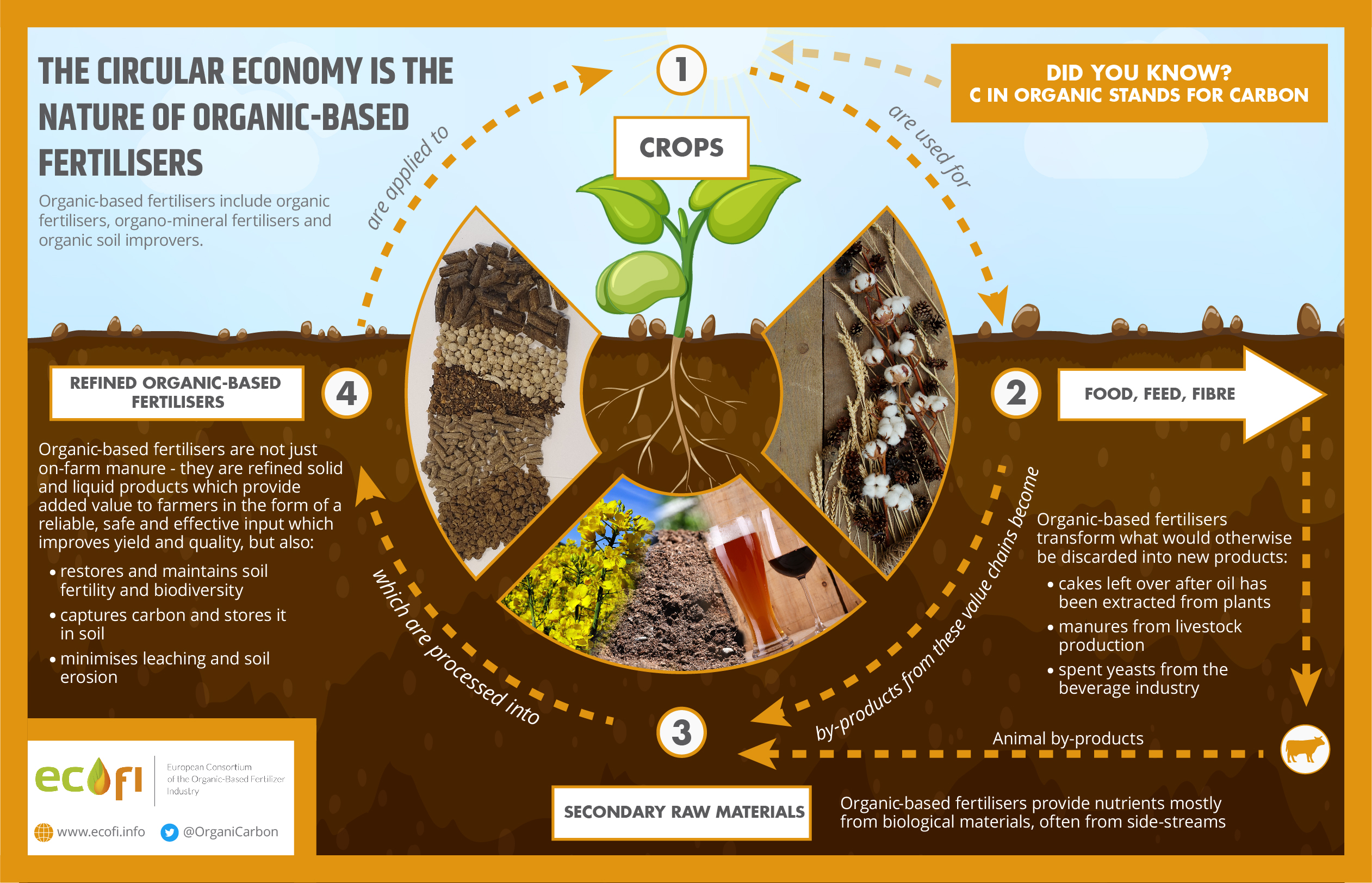
The refined organic-based fertiliser industry was born out of concepts of revalorisation of side-streams and waste materials – among them poultry litter, oil and grape cakes, fresh fish, fish bones and seafood shells, cocoa shells, or even leather tanning by-products, among others.
For over a century, the refined organic fertiliser industry has been working symbiotically with other industrial and agricultural value chains. There is an opportunity to transfer this knowledge and best-practice to a much broader target group, sharing expertise about innovations, and scaling up the application of refined organic-based fertilisers across Europe.
The benefits of industrial symbiosis and circularity for waste reduction are clear but still require effort. Stakeholders must work together to optimise resource use, close material loops, minimise emissions and increase carbon storage into the soil by recycling products and using them as inputs for other production processes to ensure a more circular and sustainable future.
ECOFI provides information and support on the new opportunities offered by the EU Fertilising Products Regulation, shares its members experience and best-practices in developing high-quality organic-based products and promotes such a circular model incorporating OBFs for the achievement of more sustainable food systems in Europe and across the globe.